
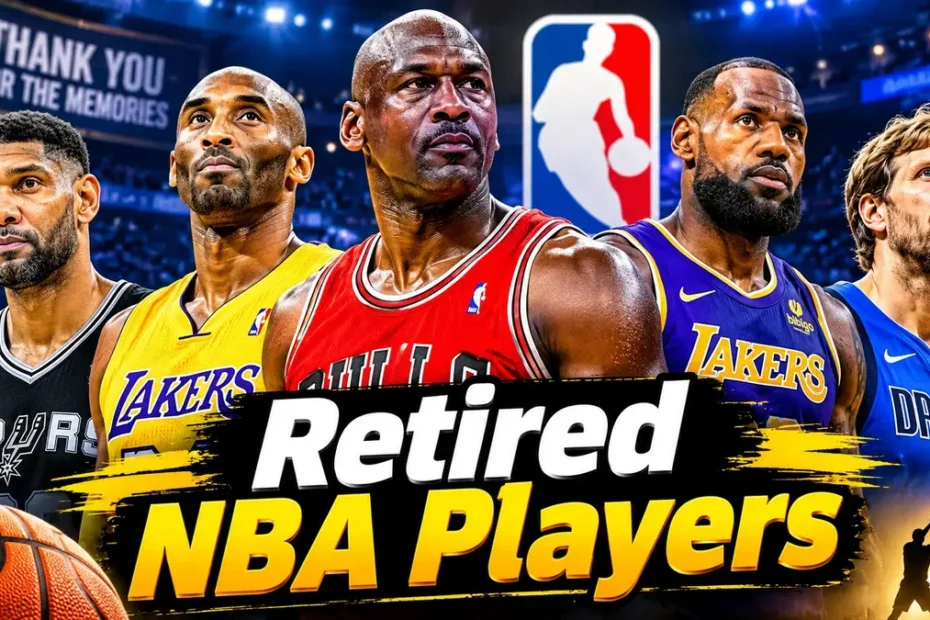
You watched your favorite stars dominate the court, then they vanished from the spotlight. Most fans never learn what happens to these athletes once the jerseys come off — and the reality often shocks people. This guide walks you through the real lives, finances, and second acts of retirement NBA players so you understand the full picture beyond the highlights.
What Happens to Former Pros After the Final Buzzer?
The average NBA career lasts about 4.5 years. When that window closes, retirement NBA players face a sudden identity shift that few outsiders understand. The structure, travel schedule, and adrenaline of professional basketball disappear overnight.
Many former athletes describe the first year as the hardest. They wake up without a practice schedule, a locker room, or a clear purpose. The transition demands planning that most players never received during their playing days.
How Much Money Do Retired Basketball Players Actually Keep?
Headlines focus on massive contracts, but the real numbers tell a different story. After taxes, agent fees, and lifestyle costs, most players walk away with far less than fans assume.
A player earning $10 million per season may take home roughly $5 million after federal and state taxes. Add in agent commissions (typically 2-4%), union dues, and personal expenses, and the actual savings shrink fast.
The NBA Pension Plan: What Retirement NBA Players Receive
The NBA offers one of the strongest pension systems in professional sports. Retirement NBA players who played at least three seasons qualify for monthly payments starting at age 50.
According to the National Basketball Retired Players Association (NBRPA), a player with three years of service receives approximately $56,000 per year at age 62 [Source: nbrpa.org]. Those with ten or more seasons earn significantly higher amounts, sometimes exceeding $200,000 annually.
Why Do So Many Former Players Face Financial Trouble?
A widely cited National Bureau of Economic Research study found that roughly 60% of NBA players face financial distress within five years of leaving the league [Source: nber.org]. The reasons run deeper than poor spending habits.
Divorce settlements, failed business ventures, and pressure to support extended family drain savings quickly. Many retirement NBA players also lack financial literacy because they entered the league straight from high school or college without formal money management training.
Second Careers: What Do Retirement NBA Players Do Next?
Life after basketball opens doors that surprise most fans. Retirement NBA players frequently move into broadcasting, coaching, real estate, tech startups, and restaurant ownership.
- Broadcasting: Charles Barkley and Shaquille O’Neal became television icons.
- Business: Magic Johnson built a billion-dollar investment portfolio.
- Coaching: Steve Kerr transitioned from player to championship-winning head coach.
- Tech: Andre Iguodala invested early in companies like Twitter and Zoom.
The key pattern? Players who planned their second act during their playing years tend to thrive long after the final game.
What Health Challenges Follow These Athletes for Decades?
The physical toll of professional basketball does not end at the final game. Former pros commonly deal with chronic knee pain, back problems, and joint replacements well into their 50s and 60s.
A 2019 review published through the NBA’s own health records showed that former players experience higher rates of cardiovascular issues compared to the general population [Source: nba.com]. Mental health struggles, including depression and anxiety, also affect a significant portion of the retired community.
How Does the NBA Alumni Association Support Former Players?
The National Basketball Retired Players Association serves as the primary support network for retirement NBA players across the country. Founded in 1992, the organization provides health insurance assistance, career counseling, and emergency financial aid.
Membership gives former players access to wellness programs, educational scholarships for their children, and networking events that connect them with business opportunities. The NBRPA currently supports over 1,000 living members.
Which Retirement NBA Players Built Empires Off the Court?
Several retirement NBA players turned their fame into lasting business legacies that rival their on-court achievements:
- Michael Jordan: The Jordan Brand generates over $6 billion in annual revenue for Nike. Jordan became the first billionaire athlete.
- Magic Johnson: His investment firm, Magic Johnson Enterprises, holds stakes in Starbucks franchises, movie theaters, and real estate developments.
- Junior Bridgeman: After a modest NBA career, Bridgeman built a fast-food franchise empire worth an estimated $600 million.
These stories prove that on-court success does not guarantee off-court wealth — strategic thinking does.
Can Retired Players Return to Basketball as Coaches?
The sideline offers a natural second home for many former pros. Coaching allows them to stay connected to the game while mentoring the next generation of talent.
- Jason Kidd won an NBA championship as head coach of the Dallas Mavericks.
- Penny Hardaway rebuilt the University of Memphis basketball program.
- Chauncey Billups took over the Portland Trail Blazers coaching staff.
Each of these men channeled their playing experience into leadership roles that extend their basketball legacy far beyond their playing days.
How Can Young Athletes Learn From These Post-Career Journeys?
Current high school and college players benefit enormously from studying the post-career journeys of retirement NBA players. The lessons go far beyond basketball skills.
- Start financial planning during your rookie season.
- Build a personal brand that outlasts your playing days.
- Invest in education and certifications while you still have a steady income.
- Surround yourself with advisors who prioritize your long-term health over short-term gains.
The athletes who ignore this advice often become cautionary tales that future generations study closely.
What Role Does Mental Health Play After Retirement?
For most of their lives, retirement NBA players defined themselves by one label: basketball player. When that label disappears, the psychological impact hits hard.
Sports psychologists report that former professional athletes experience identity loss at rates significantly higher than the general public. The sudden absence of crowd noise, media attention, and team camaraderie creates a void that money cannot fill.
Programs like the NBA’s Player Assistance Program now offer confidential counseling specifically designed for this transition period. Early intervention makes a measurable difference in long-term well-being.
How Do Former Stars Give Back Through Philanthropy?
Many retirement NBA players channel their resources into community work that outlasts their playing fame and creates generational impact.
- Dikembe Mutombo built a $29 million hospital in his native Democratic Republic of Congo.
- Alonzo Mourning founded the Overtown Youth Center in Miami, serving thousands of at-risk children.
- Grant Hill supports educational initiatives through the Hillman Foundation.
These efforts demonstrate that the most meaningful chapter of a player’s life often begins after the final game ends.
Michael Jordan — Childhood to Current Life Biography
| Life Stage | Year(s) | Key Details |
| Birth & Early Childhood | 1963–1975 | Born February 17, 1963, in Brooklyn, New York. Raised in Wilmington, North Carolina. Developed a love for baseball and basketball early. |
| High School Years | 1976–1981 | Attended Emsley A. Laney High School. Famously cut from the varsity basketball team as a sophomore, which fueled his competitive fire. |
| College Career | 1981–1984 | Played three seasons at the University of North Carolina under Coach Dean Smith. Hit the game-winning shot in the 1982 NCAA Championship. |
| NBA Draft & Early Career | 1984–1990 | Selected 3rd overall by the Chicago Bulls in 1984. Won Rookie of the Year. Scored 63 points against the Boston Celtics in the 1986 playoffs. |
| First Three-Peat | 1991–1993 | Led the Bulls to three consecutive NBA Championships. Won three Finals MVP awards and became a global icon. |
| First Retirement & Baseball | 1993–1995 | Retired abruptly after his father’s murder. Played minor league baseball for the Birmingham Barons. |
| Return & Second Three-Peat | 1995–1998 | Returned to the Bulls. Won three more championships. Set the 72-10 regular-season record in 1995–96. |
| Second Retirement | 1999–2001 | Stepped away from basketball again. Became part-owner and President of Basketball Operations for the Washington Wizards. |
| Final Playing Years | 2001–2003 | Came out of retirement to play two seasons with the Wizards. Scored his 30,000th career point. |
| Business Empire | 2006–2023 | Purchased the Charlotte Hornets in 2010. Grew the Jordan Brand into a global powerhouse. Sold majority stake in the Hornets in 2023. |
| Current Life | 2024–Present | Active in business, philanthropy, and motorsports (23XI Racing). Net worth exceeds $3 billion. Married to Yvette Prieto. Father of five. |
Profiles of Notable Retired NBA Stars
| Player | Years Active | Career Earnings | Current Occupation | Net Worth (Est.) | Key Post-Career Achievement |
| Michael Jordan | 1984–2003 | $93 million | Business owner, investor | $3.2 billion | Built the Jordan Brand; former Hornets owner |
| Magic Johnson | 1979–1996 | $40 million | CEO, investor | $1.2 billion | Magic Johnson Enterprises; urban development |
| Shaquille O’Neal | 1992–2011 | $292 million | Broadcaster, entrepreneur | $400 million | TNT analyst; franchise owner |
| Charles Barkley | 1984–2000 | $40 million | TV analyst, author | $50 million | Long-running TNT Inside the NBA career |
| Junior Bridgeman | 1975–1987 | $3 million | Restaurateur, investor | $600 million | 450+ fast-food franchise locations |
| Dikembe Mutombo | 1991–2009 | $168 million | Philanthropist | $80 million | Built Biamba Marie Mutombo Hospital in Congo |
Frequently Asked Questions
Q1: At what age do most NBA players retire?
Most NBA players retire between ages 33 and 36. The average career spans roughly 4.5 seasons, meaning many retirement NBA players leave the league in their late 20s due to injury or roster cuts.
Q2: Do retirement NBA players get paid for life?
Yes. Those who completed at least three seasons receive pension payments starting at age 50. The amount depends on years of service, with ten-year veterans earning the highest monthly benefits through the league’s pension plan.
Q3: What percentage of former NBA players go broke?
Research from the National Bureau of Economic Research indicates that approximately 60% of retirement NBA players experience significant financial difficulty within five years of leaving the league. Poor investments and lifestyle inflation are the primary causes.
Q4: Can retired NBA players still play in other leagues?
Absolutely. Many former pros continue competing in international leagues across Europe, China, and Australia. Others join the BIG3 league, a 3-on-3 competition created specifically for former professionals.
Q5: Who is the wealthiest retired NBA player alive today?
Michael Jordan holds that title with an estimated net worth exceeding $3 billion. His wealth comes primarily from the Jordan Brand partnership with Nike and his 2023 sale of the Charlotte Hornets.
Q6: How do former players stay connected to the game?
Retirement NBA players stay involved through coaching, broadcasting, team ownership, front-office roles, and the NBRPA. Many also run youth basketball camps and mentor current players through the NBA’s transition programs.
Your Next Step Starts Now
The story of retirement NBA players extends far beyond box scores and championship rings. These athletes face real financial, physical, and emotional battles that deserve attention and respect from every fan and aspiring player.
Take one step today. Research how professional athletes plan their second acts. Share this guide with a young player who needs to hear the truth about life after the final buzzer. The game ends for everyone — what matters is what you build next.